
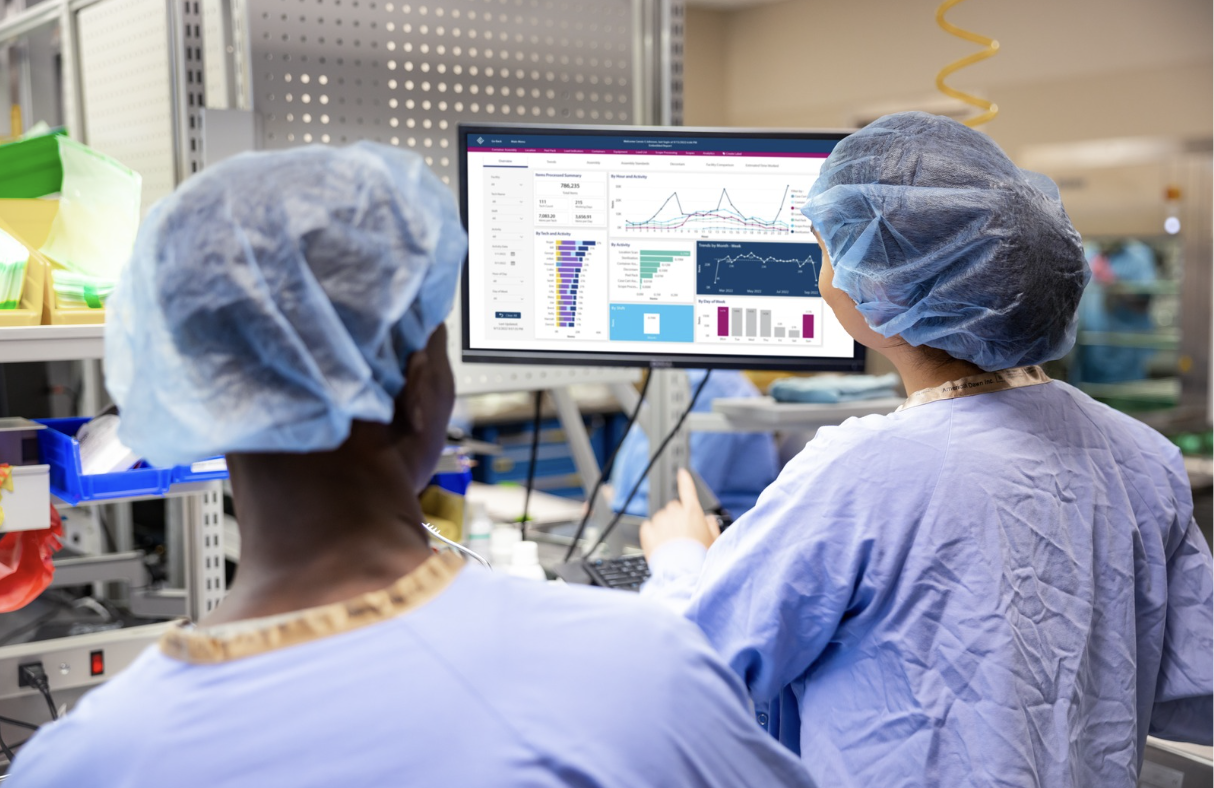
The true value of reporting isn't the dashboard or the spreadsheet. It's the time, confidence, and decisions it enables across your department.
Every day, Sterile Processing leaders rely on reporting to answer critical operational questions. But for many teams, getting those answers has traditionally meant exporting multiple reports, combining spreadsheets, and manually piecing together information before they could act on it.
That challenge was a common theme during a recent Censis podcast discussion with Alma Mendivil, MBA, CRCST, CHL, Director, Sterile Processing Department at University Medical Center of El Paso, and Hana Rogers, Quality Assurance Manager, Central Sterile Processing Department at Boston Medical Center. Their experiences highlighted a simple reality: reporting should help teams make better decisions—not create more work.
As reporting technology evolves, solutions like CensiTrac Intelligence are making it easier for SPD teams to access meaningful insights and spend more time improving operations. But the biggest impact isn't the technology itself. It's how better reporting changes the way departments work every day.
Reporting Should Support Work—Not Create More of It
Reporting should help answer questions, not create more work.
Hana Rogers described a challenge that many SPD leaders know all too well:
"We had to do multiple reports to get one thing that we wanted out of the report. At times, we had to download them into numerous Excel spreadsheets and break up the data to get what we were looking for."
What should be a quick answer often becomes multiple report exports, manual spreadsheet work, and valuable time spent assembling information before it can be analyzed. When reporting fits naturally into daily workflows, teams spend less time gathering data and more time acting on it.
Less Time Preparing Data. More Time Improving Operations
One of the biggest improvements customers described wasn't simply faster reporting. It was reducing the manual work required before analysis could even begin.
As Alma Mendivil shared:
"The manual effort that it took would increase the chances for errors because you're having to extract multiple reports."
Reducing manual effort doesn't just save time. It also reduces opportunities for human error and gives teams greater confidence in the information they're using.
Stitching together reports in tools like Excel may still be necessary for special projects and deeper analysis. But it shouldn't be a required step just to answer everyday operational questions.
Confidence Changes Conversations
Reliable reporting doesn't just improve efficiency. It changes conversations.
When data is consistent, accurate, and easy to access, leaders spend less time validating reports and more time discussing staffing, workflow improvements, department performance, and operational priorities.
As Alma explained:
"These conversations are being focused more on operational improvements."
Instead of questioning the data, teams can focus on what it means and what actions to take next. A shared, trusted source of information leads to faster decisions, stronger collaboration, and more productive discussions.
From Reactive to Proactive Operations
Perhaps the biggest shift customers described wasn't better reporting. It was becoming more proactive.
As Alma described:
"It's allowing me to be a little bit more proactive rather than having to wait until the end of the month to identify any trends."
That shift changes how departments operate. Instead of identifying trends weeks after they've occurred, leaders can recognize issues sooner, adjust staffing more effectively, and address operational challenges before they become larger problems.
Customers shared examples ranging from identifying trays sitting too long in Prep & Pack to preparing daily huddles more efficiently, giving supervisors more time to support their teams instead of gathering information
The Ripple Effect Across the Department
Better reporting benefits far more than the person running reports.
Supervisors spend less time gathering information. Managers gain faster insight into department performance. Leadership receives clearer operational updates that support better decision-making.
Rather than spending valuable time validating reports, teams can focus on solving operational challenges, strengthening collaboration, and improving patient care. Reporting becomes more than an administrative function. It becomes a shared resource that helps align departments around better outcomes.
The Real Value of Better Reporting
The greatest value of better reporting isn't the dashboard or the spreadsheet.
It's what happens because of it.
When SPD teams spend less time searching for answers and more time understanding their data, they gain the confidence to make faster decisions, identify opportunities sooner, strengthen collaboration, and devote more time to improving operations.
Alma captured that impact best:
"The biggest takeaway is the amount of time that is going to be saved."
That's the real value of better reporting. When teams spend less time building reports, they gain more time to improve workflows, support their staff, and deliver exceptional patient care.
