What Is a Healthcare AI Solution?
A healthcare AI solution uses tools like machine learning, predictive analytics, and automation to help hospitals analyze data, identify patterns, and improve how work gets done. These solutions help clinical and operational teams turn complex healthcare data into actionable insights that support efficiency, consistency, and informed decision-making.




How Hospitals Are Using AI Today
Hospitals are using AI in practical ways to reduce manual work, improve visibility, and support better cross-departmental decision-making. While many AI applications focus on clinical care and patient engagement, hospitals are increasingly applying AI to operational workflows where efficiency, consistency, and safety are critical.
Clinical Data Analysis & Decision Support
AI supports clinical teams by analyzing imaging, diagnostic results, and patient data to identify patterns and flag risks earlier. These tools help prioritize care and reduce variability while supporting, not replacing, clinical judgment.

AI in Sterile Processing
Sterile processing departments generate large volumes of data and rely on tightly timed, repeatable workflows, making them a natural fit for AI-driven analytics and automation. By applying AI where manual work and variability traditionally occur, hospitals can enable safer, more efficient SPD operations.
With AI in sterile processing, hospitals can:
✓ Automate routine tasks to reduce manual effort and errors
✓ Improve tracking and throughput for instruments and trays
✓ Gain real-time insights that support quality improvement
CensisAI² is an advanced analytics solution designed specifically for sterile processing departments, integrating seamlessly with existing workflows to deliver actionable insights into accuracy, efficiency, and compliance.
Learn more about how AI enhances sterile processing workflows →

AI Copilots in Hospital Operations
AI copilots are designed to support hospital staff by surfacing relevant information, guiding tasks, and reducing cognitive load during complex workflows. Rather than replacing clinical or technical expertise, copilots provide real-time assistance that helps teams work more accurately and efficiently.
In surgical and sterile processing environments, AI copilots help teams navigate high-volume, detail-driven tasks by offering guidance at the moment it’s needed. This support improves consistency, reduces errors, and helps staff stay focused during demanding workflows.
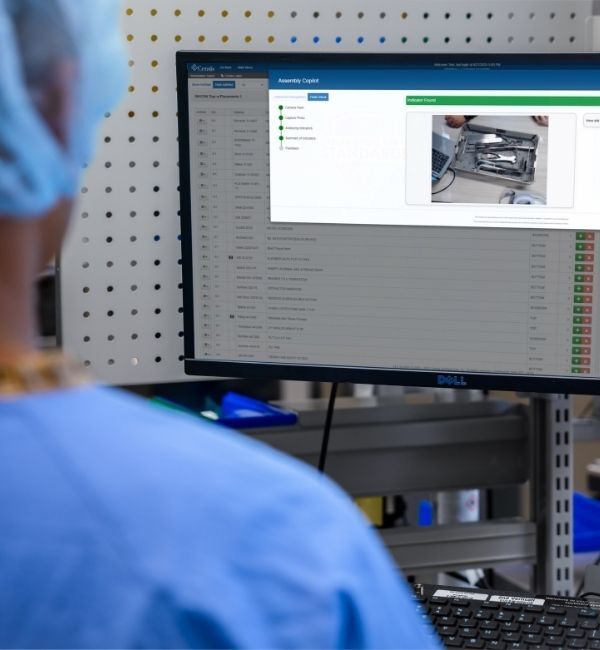
Learn how Censis Assembly Copilot: Final Check uses computer vision to detect missing indicators, preventing surgical delays and ensuring compliance without disrupting existing workflow.
Evaluating AI Risk in Healthcare
As hospitals expand the use of AI across clinical and operational workflows, there is growing focus on understanding and managing AI-related risk. While AI delivers clear benefits in efficiency, visibility, and decision support, healthcare organizations recognize that these technologies must be deployed responsibly.
As a result, most hospitals have begun establishing acceptable use policies for AI. Before any AI-powered solution is deployed, it is typically evaluated across a consistent set of risk dimensions to ensure safety, trust, and alignment with healthcare standards.
AI solutions are commonly assessed based on:
✓ Patient Safety
✓ Cyber Security
✓ Transparency
✓ Regulatory Compliance
✓ Bias and Fairness
✓ Reliability
Evaluating AI across these dimensions enables hospitals to make informed decisions, balancing innovation with patient safety, operational integrity, and regulatory responsibility.
Sterile Processing Solutions
Our AI-driven technologies, fueled by an SPD-centric company culture, provide confidence and insights available in no other platform.